

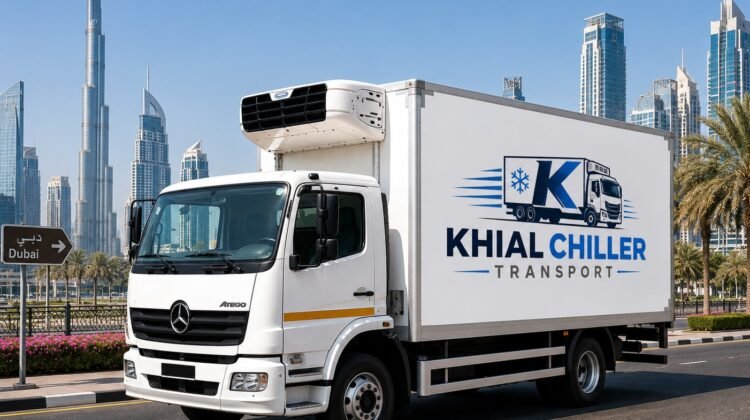
Planning Cold Chain Transport
Planning Cold Chain Transport for Ramadan in the UAE
For a month, UAE food logistics operates on an inverted clock with several times the normal volume. Businesses that plan transport for it in advance have a completely unique month from those that do not.
Ramadan is the most demanding period in the UAE food calendar and the one least written about from a transport perspective. Volumes rise sharply, delivery windows compress into a few critical hours, working patterns shift, traffic behaves differently, and refrigerated vehicle availability tightens across the whole market. None of that is a surprise it happens every year, which makes it entirely plannable.
Table of Contents
Four Things That Change, All at Once
Ramadan does not simply mean more deliveries. It means a different operating shape, and each element compounds the others.
- Volume rises across the whole food chain: Hotels, caterers, restaurants, supermarkets, dessert and sweets producers, date suppliers, and beverage distributors all increase throughput simultaneously. This is not a redistribution of demand between businesses; it is a genuine market-wide increase, which is why vehicle availability tightens rather than shifting.
- The clock inverts: The critical delivery window is the afternoon before Iftar, and a second wave runs late into the night. Early-morning delivery slots that work all year suddenly serve a kitchen that has not started preparing yet, while the hours that matter are the ones when everyone else is also delivering.
- Working hours shift: Reduced working hours apply across much of the market, which compresses the window in which receiving bays are staffed and paperwork can be signed. A delivery that arrives outside those hours may sit on a bay rather than going straight into cold storage.
- Traffic behaves differently: The run-up to iftar produces very heavy, very concentrated traffic. Journey times that are reliable in January are not reliable at 5pm during Ramadan, and a route plan built on normal transit times will fail on the days it matters most.
Everything Compresses Into Two Windows
Pre-iftar afternoon
This is the highest-pressure period of the day. Fresh products, prepared foods, and last-minute top-ups all need to land before service. Traffic peaks in the same hours. This scenario is where a delivery that is thirty minutes late becomes a delivery that is functionally useless and where the value of an early departure and a buffer in the route plan is at its highest.
Late-night resupply
After taraweeh, a second commercial period runs late, particularly for supermarkets, dessert outlets, cafes, and sweets producers. Roads are clear, receiving is often possible, and this time frame is the most under-used delivery window of the entire month. Businesses that shift replenishment into this window get better transit times and better vehicle availability.
The Single Best Planning Move
Move whatever can be moved out of the pre-iftar crush. Bulk replenishment, non-perishable-adjacent chilled stock, packaging, dry goods, and anything with a shelf life measured in days rather than hours can usually run at night or early in the morning. Reserve the contested afternoon window for the loads that genuinely cannot move earlier.
How the Month Hits Different Businesses
- Hotel and large-scale catering: iftar and suhoor service at volumes far above baseline, often across multiple venues, with very little tolerance for late arrival. Frequently needs both chilled and frozen capacity daily, plus dry cargo for equipment and disposables.
- Sweets, dates, and dessert producers: among the sharpest seasonal peaks in the entire UAE food economy, with products that are temperature-sensitive and presentation-critical. Chilled transport for chocolate and cream-based products becomes a quality issue, not just a safety one.
- Supermarkets and grocery: higher replenishment frequency, larger basket sizes, and a late-night shopping pattern that pushes restocking into unusual hours.
- Cloud kitchens and delivery platforms: order volume concentrated into a narrow band around iftar, with the associated pressure on prep-to-outlet transfers.
- Beverage distribution: a substantially higher volume of chilled drinks, juices, and water, which is dense cargo and therefore weight-limited rather than volume-limited.
- Charitable and community iftar operations: large-scale meal distribution, often to multiple sites, frequently organized at shorter notice than commercial catering and needing vehicles at precisely the most contested hours.
Booking Lead Time Is the Whole Game
Refrigerated vehicle supply in the UAE is finite. During Ramadan, demand exceeds it. That is not an operator strategy; it is arithmetic, and it means the market clears on lead time.
| When you book | What you can expect |
|---|---|
| 6+ weeks ahead | Full choice of vehicle class, driver continuity, the delivery windows you actually want, and contract rates rather than spot rates. |
| 3–4 weeks ahead | Good availability on standard chiller vans; freezer capacity and larger trucks are already tightening. Windows are negotiable but not guaranteed. |
| 1–2 weeks ahead | Constrained. You may receive a vehicle, but you might not receive a vehicle, but you might not get your preferred class, window, or both. |
| During the month | Short-notice cover only, subject to whatever is genuinely spare. Freezer capacity in particular is often simply unavailable. |
What to send when you book
Dispatch can plan far better with detail. Send the full month’s expected pattern rather than a single date: which days, which windows, which sites, roughly what volume, whether you need chilled and frozen separately, and whether you also need dry cargo capacity for equipment or packaging. A month-long booking planned in one conversation is cheaper and more reliable than thirty individual scrambles.
Six Operational Adjustments Worth Making
- Build a real buffer into pre-Iftar routes: Do not plan against normal transit times. The last hour before iftar is a particularly poor time to discover that Sheikh Zayed Road is running at half speed.
- Shift what you can into the night window: It is the most underused capacity in the month, and the transit times are excellent.
- Confirm receiving hours at every site: Reduced working hours mean a delivery that arrives correctly may still sit on an unstaffed bay. Confirm who is receiving and until when, and remember that product standing on a bay in ambient heat is a genuine excursion risk even after a perfect journey.
- Split long multi-drop routes: Compressed windows and heavier door traffic make long sequential routes riskier. Two shorter parallel routes protect the last drop.
- Separate chilled and frozen properly: Peak season is exactly the wrong time to improvise a mixed load. Book the correct vehicle for each temperature band rather than compromising both.
- Plan the equipment moves too: large iftar operations need chafing dishes, tables, disposables, and packaging as well as food. That is dry cargo work, which requires a pickup or tail lift truck alongside the refrigerated vehicle, not a refrigerated vehicle carrying furniture.
Eid Is a Second, Different Peak
Planning that stops at the end of Ramadan misses the tail. Eid produces its own distinct demand shape: gifting volumes for sweets, dates, and chocolate; large family and hotel dining; and a sharp change in the daily rhythm as the fasting schedule ends.
At the same time, drivers leaving and traveling across the market reduce available capacity precisely when a second peak arrives. Businesses that book Ramadan but forget Eid often find that the week after the month ends is the hardest.
Plan the whole arc
- Pre-Ramadan build-up stock positioning and cold storage fill in the two weeks before the month.
- The month itself sustained a daily peak on an inverted clock.
- Eid gifting and hospitality volume was affected by reduced market-wide capacity.
- Post-Eid normalization: the point to review what worked and lock in contract terms for next year.
Frequently Asked Questions About Planning Cold Chain Transport
Q: When should I book chiller vans for Ramadan in the UAE?
Six weeks ahead gives you full choice of vehicle class, the delivery windows you want, and a contract rather than spot pricing. Three to four weeks still works for standard chiller vans, but freezer capacity and larger trucks tighten first. Booking during the month means taking whatever is genuinely spare.
Q: Why is refrigerated transport harder to obtain during Ramadan?
Because demand rises across the entire food chain at once, hotels, caterers, supermarkets, sweets producers, beverage distributors, and charitable iftar operations all increase volume simultaneously. It is a market-wide increase rather than a redistribution, so total available refrigerated capacity becomes the binding constraint.
Q: What is the best delivery window during Ramadan?
The late-night period after Taraweeh is the most under-used window of the month: roads are clear, transit times are reliable, and receiving is often possible. The pre-iftar afternoon is the most contested and the least forgiving. Move whatever can be moved out of the afternoon crush.
Q: How much extra time should I allow for pre-iftar deliveries?
Considerably more than normal transit times suggest. The hours before iftar produce heavy, concentrated traffic across the UAE. Plan against a realistic peak-condition transit time with a genuine buffer because a delivery that arrives after service has started has effectively failed regardless of its temperature record.
Q: Do I need separate vehicles for chilled and frozen goods during Ramadan?
Yes, and peak season is the worst time to improvise. A chiller van and a freezer van are different vehicles, each with its own temperature band. Compromising between them risks failing both loads at the time of year when a failure costs the most.
Q: Should I plan transport for Eid separately?
Yes. Eid produces its own peak gifting volumes for sweets, dates, and chocolate, plus large-scale hospitality, while market-wide driver availability is reduced by leave and travel. Businesses that plan Ramadan carefully but treat Eid as an afterthought often find that the week after Ramadan is the more challenging one.