
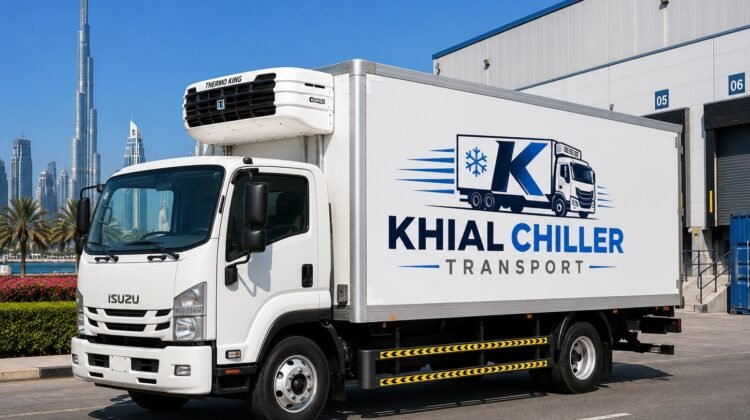
Why Chilled Loads Arrive Warm
Why Chilled Loads Arrive Warm: Failure Points on a Real Delivery Run
When a consignment arrives out of specification, the refrigeration unit gets the blame. In our experience, the refrigeration unit is almost never the cause. It is one of eight other things.
A temperature excursion is rarely a dramatic event. There is no alarm, no breakdown, no obvious fault. The van ran all day, the display showed the right number, and the product still arrived warm at the last two stops. The consistent pattern warrants a walk through the preventable causes, most of which are determined before the vehicle leaves the yard.
Table of Contents
01. Loading Into a Warm Box
This is the most common single cause and the easiest to eliminate. A refrigeration unit cools air. It does not cool products efficiently, and it certainly does not cool an insulated body, its floor, its walls, and a full load of cargo simultaneously.
If a van arrives at your loading bay at ambient temperature and the unit is switched on as the cargo goes in, the system spends the first part of the journey cooling the box itself. During that window your product is sitting in warm air and, worse, in contact with warm surfaces. In a Dubai summer, a vehicle standing in the sun can have an interior surface temperature far above the ambient air temperature.
What correct practice looks like
- The unit runs before arrival, so the body reaches target temperature before loading begins.
- The driver can state the box temperature at the moment of loading, not just at the moment of departure.
- Loading happens with the doors open for the shortest practical time, not with the doors propped open for the entire duration of the bay slot.
When you are comparing providers, ask directly whether vehicles are pre-cooled and how that is verified. It costs fuel and time to do properly, which is precisely why it is the first thing dropped by an operator competing purely on rate.
02. The Cargo Was Never Cold in the First Place
A chiller van is designed to maintain temperature, not to reduce it. This distinction is not pedantic; it is the difference between a compliant delivery and a failed one.
If a product comes out of a kitchen, a production line, or a warehouse staging area above its target temperature, the vehicle will fight it for the entire journey and probably lose. The cooling capacity available in a van-sized unit is sized for maintenance plus a margin for door openings, not for pulling several hundred kilograms of product down several degrees.
Where this bites hardest is in prepared food and catering, where a product may have been cooked, blast-chilled inadequately, and then staged on a loading bay for twenty minutes before the vehicle arrived. By the time the product enters the van, the excursion has already occurred.
03. Every Door Opening Is Withdrawn From the Same Account
Single door openings are fine. The problem is cumulative exposure across a multi-stop route and the way it compounds.
Each time the rear doors open, cold air, being denser, spills out at floor level, and hot, humid ambient air flows in above it. The unit then works to remove both the heat and the moisture that just entered. In Dubai’s summer humidity, the moisture load is significant and shows up as frost accumulation on the evaporator, which in turn reduces the unit’s efficiency for the rest of the day.
- A route with four stops and disciplined door management is a different thermal problem from a route with fourteen stops and a driver who leaves doors open while paperwork is signed.
- Recovery time after a door opening is not instantaneous. On a tight multi-drop route, the box may never fully return to the target between stops.
- The effect is cumulative, which is why the last stop on a long route is where failures show up, not the first.
Practical Fix
Sequence the route so that the most temperature-sensitive consignment is delivered first, and position it furthest from the doors while it is on board. On long multi-drop runs, splitting into two shorter parallel routes often solves a thermal problem that no amount of extra cooling capacity will resolve
04. Loading Against the Evaporator
This one is invisible, which is why it is so persistent. The refrigeration unit discharges cold air at one point and draws return air at another. That circuit has to complete for the whole load to be cooled evenly.
Stack cargo flush against the discharge outlet, or fill the box wall to wall and floor to ceiling with no channels, and you create a load where the air short-circuits back to the return without ever reaching the far end. The thermostat sits in the return air stream and reads a perfectly acceptable temperature. The cargo at the back of the box does not receive the same airflow.
Failure
What good loading looks like
Leave clearance at the discharge outlet. Maintain a channel along the roof line so air can travel the length of the box. Do not block the return intake with a pallet pushed to the bulkhead. Use spacers or slotted pallets so air can move under a dense load rather than around a solid brick of cargo.
None of this is complicated, but it is a trained behavior rather than an intuitive one, which is one of the strongest practical arguments for a driver-included booking on cold chain work.
05. Two Ways the Temperature Reading Lies to You
Air temperature is not product temperature
The dashboard display reports the air in the box, usually at the return intake. Product temperature lags air temperature substantially; dense, packed cargo changes its temperature slowly in both directions. A box that dropped to 3°C twenty minutes ago may contain product still sitting at 9°C. Conversely, a product that started cold has thermal inertia that can mask a genuine excursion for a while, then reveal it all at once.
Failure
One sensor in the wrong place
A single sensor near the unit tells you about the coldest, best-circulated part of the box. The thermal problem, if there is one, is at the far end near the doors. Where the cargo justifies it, an independent data logger placed with the product at the door end gives you a far more honest record than the vehicle’s own display, and it is the record an auditor or an insurer will actually want.
If you are moving anything where an excursion carries real financial or regulatory consequences, do not rely solely on the vehicle’s built-in readout. Independent logging is inexpensive relative to a rejected consignment.
06. The Time the Cargo Spends Outside the Vehicle
The final two failure points do not happen in the van at all, which is precisely why they are so often missed in a post-incident review.
- Engine-off standing time: On many refrigerated vans, the cooling unit is driven by the vehicle engine. Park for a long delivery, a long queue at a receiving bay, a prayer break, or a fuel stop with the engine off, and the unit stops. The insulated body will hold temperature for a while, but in July it will not hold it for an hour. Vehicles with standby capability or independent units behave differently, which is worth confirming for routes with long stationary periods.
- Staging at the receiving end: The van arrives on time and in specification, the cargo is unloaded onto a receiving bay, and then it sits there for twenty-five minutes in ambient heat while somebody finds the person with the key to the cold room. The delivery record shows a compliant handover; the product experienced an excursion anyway. This failure is the receiver’s failure rather than the carrier’s, but it destroys the same stock.
If You Are Investigating a Failure
Reconstruct the whole timeline, not just the drive. When did the product leave its previous cold environment? What temperature was it at loading? How long were the doors open, in total? Where was it in the box? How long did it stand at the destination before it went into cold storage? In most cases the answer is visible in that sequence, and the refrigeration unit is innocent.
Frequently Asked Questions About Why Chilled Loads Arrive Warm
Q: My chiller van display read 4°C, but the product was warm. How?
The display reports air temperature, typically at the return air intake near the unit, and product temperature lags significantly behind air temperature. If the load blocked airflow, air could short-circuit back to the sensor without reaching the far end of the box. The reading accurately measures the air but misleads about the cargo.
Q: What is pre-cooling, and why does it matter so much?
Pre-cooling means running the refrigeration unit to bring the insulated body down to the target temperature before cargo is loaded, rather than after. Without pre-cooling, the refrigeration unit cools the box while products sit in warm air and against warm surfaces, especially in UAE summer conditions when most excursions occur.
Q: Can a chiller van cool down product that is loaded warm?
Not reliably. Refrigerated vehicles are designed to maintain temperature, not to reduce it. The cooling capacity is sized for holding a load plus a margin for door openings. Product must reach its target temperature before loading, using proper chilling or blast-chilling equipment.
Q: Why does the last stop on my route always have problems?
Cumulative door-open exposure. Each opening admits hot, humid air, and on a tight multi-drop route the box may not fully recover between stops. The effect compounds along the route, so the final consignments have experienced the most exposure. Sequencing the most sensitive load first, or splitting into two shorter parallel routes, usually resolves it.
Q: Does the refrigeration unit keep running when the engine is off?
On many van-based systems the unit is engine-driven and stops when the engine stops. The insulated body will hold temperature for a period but not indefinitely in UAE summer conditions. If your route involves long stationary periods, ask specifically about standby capability or independently powered units.
Q: Should I use my temperature logger?
If an excursion could have real financial or regulatory consequences, then yes, you should use your temperature logger. An independent logger placed with the product at the door end of the load gives a more honest record than the vehicle’s built-in display, and it is the evidence an auditor, a client, or an insurer will ask for.
Q: Who is responsible if chilled loads arrive warm?
It depends where in the chain the excursion occurred, which is exactly why documentation matters. Reconstruct the full timeline of product temperature at loading, box temperature at loading, total door-open time, position in the load, and standing time at the destination before it went into cold storage. In many disputes the excursion happened during staging at one end or the other, not in transit.