
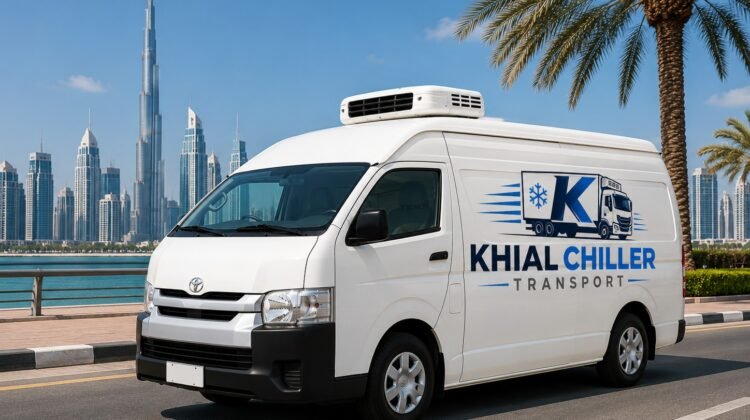
Owning A Refrigerated Van
Costs & Pricing · Decision Framework
Rent or Buy? The Real Cost of Owning a Refrigerated Van in the UAE
Refrigerated Van
Every rental company says renting is cheaper. We are a rental company, so treat this with appropriate suspicion and then check the arithmetic, because there are cases where buying genuinely wins.
There is a point at which owning a refrigerated vehicle beats renting one. Most rental providers never say so, which makes their cost comparisons useless. The honest version of this analysis identifies the crossover point and tells you which side of it you are on. It depends almost entirely on one variable: utilization.
Table of Contents
The Costs Everyone Includes
When a business model is buying a chiller van, it usually captures the obvious items. These are real, significant, and not where the analysis goes wrong.
- Purchase price of the chassis plus the insulated body and refrigeration unit — note that the refrigeration system is frequently a separate line from the vehicle.
- Registration, testing, and Mulkiya renewal annually.
- Comprehensive insurance, which is priced higher for commercial refrigerated vehicles than for equivalent panel vans.
- Routine servicing on the chassis at manufacturer intervals.
- Fuel, which for a refrigerated vehicle includes running the cooling unit, not just the drivetrain.
- Financing cost if the purchase is funded rather than paid outright.
A model built from those six lines will produce a number that looks favorable against rental. It is also incomplete by a wide margin.
The Six Costs That Only Appear in Year Two
- Refrigeration unit servicing and repairThis is the big one. The reefer unit is a separate piece of machinery with its own service schedule, its own specialist technicians and its own failure modes. In UAE ambient conditions it works harder than the same unit would in a temperate climate. Compressor, condenser and door seal work is not covered by a chassis service plan and is not cheap.
- Insulation degradationInsulated bodies lose thermal performance over time as panels absorb moisture and seals age. The vehicle does not fail; it just gets progressively worse at holding temperature in August, which is precisely when you need it most. This shows up as rising fuel consumption before it shows up as a compliance problem.
- Driver cost, fully loadedNot just salary. Visa and sponsorship costs, medical, licence class requirements, end-of-service entitlement, annual leave cover and the training that makes a driver competent at cold chain handling rather than merely licensed to drive.
- Downtime and coverThe single most underestimated item. When your one owned van is in the workshop, your deliveries still have to happen. Either you rent a replacement at short-notice daily rates the most expensive rate in the market or you miss deliveries. Owning one vehicle means owning its downtime.
- Compliance administrationVehicle food transport permits, cleaning records, calibration of temperature monitoring, and the record-keeping that an inspection or a client audit will ask for. When you rent, this sits with the operator. When you own, it sits with you.
- Resale exposureThe market for used refrigerated vehicles in the UAE is narrower than the market for used panel vans, and buyers scrutinise the reefer unit’s condition heavily. Your exit price is not the depreciation curve of a normal commercial vehicle.
The Crossover Point: Utilisation, Not Volume
The question is not how much cargo you move. It is how many days per week a dedicated vehicle would be earning.
| Utilisation pattern | Typical verdict | Reasoning |
|---|---|---|
| 1–2 days per week, irregular | Rent, clearly | An owned asset idle five days a week still depreciates, insures and services. Fixed cost against low use is the worst possible shape. |
| 3–4 days per week, predictable | Rent on a monthly contract | Contract rental captures most of the cost benefit of ownership without the capital, the downtime exposure or the compliance overhead. |
| 5–6 days per week, sustained, single route | Genuine crossover model both | This is where ownership starts to compete. The answer depends on your cost of capital, whether you can absorb downtime, and whether you want the compliance burden. |
| 7 days, multiple vehicles, core to the business | Owning usually wins with caveats | At fleet scale you can self-insure downtime with spare capacity and justify in-house maintenance. This is a logistics operation, not a side function. |
The Honest Line
If refrigerated distribution is your business, own the fleet. If refrigerated distribution is something your business needs in order to do its actual business, a restaurant group, a florist, a pharmacy chain, or a food producer renting almost always wins, because the ownership costs are real, but the ownership expertise is not something you want to build.
The Option Most People Miss: Contract Rental
The rent-versus-buy framing is a false binary. There is a middle position that captures most of the advantages of both, and it is what the majority of established UAE food and pharma businesses actually run on.
A monthly or quarterly contract provides you with you a dedicated vehicle and, in most cases, a consistent driver who learns your route. Functionally, it behaves like an owned vehicle: it is there every morning, set up for your cargo, and the driver knows your sites. Financially it behaves like a rental: no capital, no depreciation exposure, no reefer maintenance liability, and downtime is the operator’s problem to solve rather than yours.
Behaves like owning
Operational continuity
Same vehicle, same specification, same driver, same start time. Your team stops re-explaining the route every week.
Behaves like renting
Financial flexibility
No capital tied up, a predictable operating cost line, and the ability to scale up during Ramadan or a seasonal peak without buying a second asset you will not use in October.
Seven Questions to Answer Before You Buy Anything
- How many days a week would this vehicle genuinely be working? Be honest, and use last quarter’s actual delivery days rather than the plan.
- What happens on the day it breaks down? If you have no answer, you have not finished the model.
- Who services the refrigeration unit? Identify the actual technician and the actual cost before purchase, not after.
- Who owns compliance? Somebody in your business must own permits, cleaning records, and temperature log retention. Name them.
- Does your volume vary seasonally? If your peak is triple your trough, an owned vehicle is sized for one of those and wrong for the other.
- What is your cost of capital? Money spent on a van is money not spent on stock, staff, or premises. That opportunity cost is a real number.
- Do you need a second vehicle type? If some of your work is dry cargo, owning a refrigerated van solves half the problem and leaves you renting anyway.
If you work through those seven and still land on buying, buy you are probably right. If two or more give you pause, contract rental is likely the better structure, and we would rather tell you that than sell you a daily booking you will regret.
Frequently Asked Questions About Owning a Refrigerated Van
Q: Is it cheaper to buy or rent a chiller van in the UAE?
It turns on utilization. Below roughly five working days a week on a sustained basis, renting is almost always cheaper once refrigeration servicing, downtime cover, driver costs, and compliance administration are included. Above that, with a predictable single route, ownership starts to compete, and you should build both models properly.
Q: What are the hidden costs of owning a refrigerated van?
The most commonly missed are refrigeration unit servicing (separate from chassis servicing and requiring specialist technicians), insulation performance degradation over time, fully loaded driver costs including visa and end-of-service, downtime cover when the vehicle is in the workshop, compliance record-keeping, and a narrower-than-expected resale market.
How long does a refrigerated van last in UAE conditions?
The chassis follows a normal commercial vehicle life, but the refrigeration unit and insulated body are the limiting factors. Sustained high ambient temperatures make the cooling system work harder than it would in temperate climates, so service intervals matter more and thermal performance declines earlier than owners typically expect.
Q: What is contract rental, and how is it different from daily rental?
Contract rental is a monthly, quarterly, or longer commitment for a dedicated vehicle, usually with a consistent driver. Operationally, it behaves like an owned vehicle: same van, same specification, same start time, but the capital, maintenance liability, downtime cover, and compliance burden remain with the operator.
Q: Should a restaurant or small food business buy its own chiller van?
Rarely. Refrigerated distribution is a support function for those businesses rather than the business itself, so the ownership costs are real, but the ownership expertise has no strategic value. Contract rental gives the same operational continuity without building a vehicle maintenance capability you did not want.
Q: What happens if a rented chiller van breaks down mid-route?
That is the operator’s problem to solve, and it is one of the strongest arguments for renting. A fleet with depth can dispatch a replacement; a business with one owned vehicle cannot. Ask any provider you are considering what their replacement process and typical response time look like.