
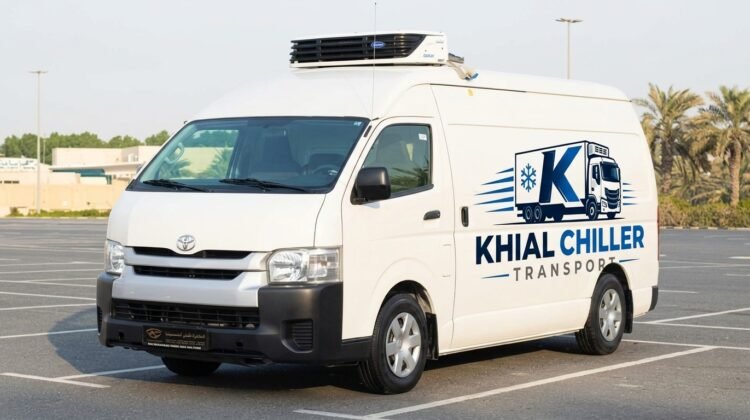
Chiller Van and a Flatbed
When One Job Needs a Chiller Van and a Flatbed on the Same Day
A restaurant opening is not a cold chain job. It is a cold chain job, a furniture move and an equipment delivery, happening on the same morning to the same address.
Mixed-load jobsWhy not to combineCoordination costDual-fleet dispatch
Most UAE refrigerated transport companies do one thing: they move cold cargo. That is a perfectly reasonable business. It becomes a problem for their clients on the days when a job needs chilled capacity and dry cargo capacity at the same address in the same window — which happens far more often than the way this market is organised would suggest.
Six Jobs That Need Both, Almost Every Time
- Restaurant and cafe openingsOpening stock is chilled and frozen. Furniture, equipment, signage, crockery, dry goods and packaging are not. Both land in the same week, often on the same morning, and the fit-out items are frequently heavy and awkward — which means a tail lift, not a refrigerated body.
- Catering and event operationsFood in a chiller van; chafing dishes, tables, linen, marquee equipment and beverage crates in a flatbed or a tail lift truck. Large iftar and wedding operations run this pattern continuously through their season.
- Retail and supermarket launchesChilled and frozen opening stock alongside shelving, display units, fixtures and ambient product. The chilled portion is a fraction of the total volume but has all the constraints.
- Exhibitions and trade showsStand build materials, display units and marketing collateral going in dry; product samples, catering and anything perishable going in chilled — on a build-up schedule with hard access windows.
- Kitchen relocations and refitsExisting chilled and frozen stock has to be moved and kept in specification while equipment, extraction, furniture and dry stores move separately.
- Seasonal peaks generallyRamadan is the clearest case — food volume rises and so does everything that surrounds serving it. Businesses plan the chilled transport and forget the equipment logistics until the week before.
Why Forcing It Into One Refrigerated Vehicle Is a Bad Idea
The instinct is to book the biggest refrigerated vehicle available and put everything in it. It seems efficient. It is usually worse on four separate counts.
- You pay cold rates for warm cargo. Refrigerated capacity costs more per cubic metre than dry capacity, for good reason. Filling a chiller body with tables and signage is the most expensive way to move furniture in the UAE.
- It creates a food safety exposure. A vehicle that carries food should have a food transport history and a cleaning record. Loading construction materials, fit-out items or non-food equipment into a food transport body creates a contamination and documentation problem — see our compliance checklist.
- It wrecks the thermal performance. Bulky dry items block airflow, prevent the cold air circuit from completing, and force repeated door openings to extract items that were loaded in the wrong order. The chilled portion of the load suffers for the sake of the dry portion.
- It is physically the wrong tool. A refrigerated body has no tail lift on most van configurations, a restricted door aperture, and an interior you do not want to scratch with equipment. Heavy or awkward items want an open bed or a tail lift.
The Underlying Point
A chiller body is precision equipment optimised for one job. Using it as general storage on wheels degrades the thing it is good at, in exchange for saving a booking you should have made anyway.
03 The Other Wrong Answer: Two Separate Providers
Having recognised that the job needs two vehicle types, most businesses call two companies — a cold chain specialist and a general transport company. That solves the equipment problem and introduces a coordination problem.
Two schedules that do not align
Two dispatch desks, two arrival windows, two sets of contact numbers. On a site with one loading bay and a two-hour access window, two vehicles arriving independently is not a plan.
Nobody owns the whole job
When the flatbed is late and the chiller van is holding perishable stock outside in July, each provider is doing their part correctly and the outcome is still a failure. Split accountability produces exactly this.
Two commercial relationships
Two quotes, two invoices, two sets of terms, two negotiations. Neither provider sees enough of your volume to price it as a real relationship.
You become the project manager
Somebody in your business spends the morning on the phone sequencing two external fleets. That is not a job anybody was hired to do, and it is the day’s most avoidable cost.
One Dispatch Desk, Two Fleets
This is the specific gap GlacierLine was set up to close, and it is genuinely unusual in this market. We run a temperature-controlled fleet and a general commercial transport fleet from the same base in Al Quoz Industrial 3, dispatched by the same desk.
Cold Chain Fleet
−25°C to +8°C
Chiller vans, freezer vans, chiller trucks and freezer trucks for anything that has a temperature specification.
General Transport Fleet
No temperature control
Pickup trucks, tail lift trucks and dry cargo trucks for equipment, fit-out, furniture and ambient goods.
Same Dispatch
Sequenced arrivals, one point of accountability, one quote and one invoice covering the whole job.
The practical benefit is not really the fleet composition. It is that when you describe a restaurant opening, the person on the phone hears one job rather than one job and a referral. Arrival times are sequenced against a single loading window, and if the flatbed hits traffic, the chiller van’s departure is adjusted rather than left to arrive early and stand in the heat.
Planning a Mixed-Load Job Properly
- Split the manifest by requirement, not by convenienceGo through the list and mark each item chilled, frozen or ambient. Do not let ambient items drift into the chilled column because they happen to be food-adjacent.
- Identify the access constraint firstOne loading bay, a two-hour window, a height barrier — the constraint determines the sequence, and the sequence determines the vehicles.
- Sequence chilled last where possibleDry cargo, equipment and fit-out go in first while the site is empty and access is easiest. Chilled stock arrives last, closest to the moment it goes into cold storage, minimising standing time.
- Confirm cold storage readiness before the chilled vehicle departsThe most common failure on an opening day is chilled stock arriving before the walk-in is running. Nothing about the transport was wrong; the stock still stood in ambient heat.
- Match the loading equipment to each vehicleHeavy or awkward items need a tail lift or a forklift. Establish which items those are before the day, not on it.
- Give one provider the whole pictureEven if you decide to split it across two companies, brief both on the whole job. A provider who understands the sequence can protect it.
The sequence that works on an opening day
- Fit-out, furniture and heavy equipment first — empty site, easiest access, tail lift available.
- Dry goods, packaging and ambient stock second — shelving is in place to receive it.
- Cold room confirmed running and at temperature.
- Chilled and frozen stock last — straight from the vehicle into cold storage with minimal standing time.
Frequently Asked Questions
Q: Can I put dry goods in a chiller van to save a second booking?+
You can, but it is usually a false economy. Refrigerated capacity costs more per cubic metre than dry capacity, bulky dry items block the cold air circuit and degrade performance for the chilled portion of the load, and loading non-food equipment into a food transport body creates a contamination and documentation exposure. Book the right vehicle for each part of the load.
Q: What vehicles do I need for a restaurant opening?+
Typically three things: a tail lift truck or flatbed for furniture, equipment and fit-out; a dry cargo vehicle for packaging, crockery and ambient stock; and a chiller van or freezer van for opening stock. The sequence matters as much as the vehicles — heavy items first while the site is empty, chilled stock last once the cold room is confirmed running.
Q: Is it cheaper to book one large vehicle or two smaller specialised ones?+
For mixed loads, two specialised vehicles almost always. You avoid paying refrigerated rates for ambient cargo, you keep the chilled load thermally intact, and you get the right loading equipment for the heavy items. The saving from combining is usually smaller than the cost of the compromise.
Q: Why do most cold chain companies not offer general transport?+
Most UAE refrigerated transport operators are specialists by design — a single fleet, a single competence. That is a defensible model, but it means their clients coordinate two providers on any job that needs both chilled and dry capacity. GlacierLine runs both fleets from one base specifically to remove that coordination burden.
Q: How do I stop chilled stock standing in the heat on delivery day?+
Sequence it last and confirm the receiving cold storage is running and at temperature before the vehicle departs. The most common opening-day failure is chilled stock arriving correctly and then standing on a bay because the walk-in is not ready. The journey was compliant; the product still experienced an excursion.
Q: Can I book chilled and dry cargo vehicles on one quote?+
With us, yes — one call, one plan, one quote and one invoice, with arrival times sequenced against your loading window rather than dispatched independently. That single point of accountability is usually more valuable on the day than any line-item saving.